Living in South Korea means your life is constantly changing. Maybe it's because of a new job, travel opportunities or the coming and going of friends, but things here are always in flux. For a person with an adventurous spirit, that can be a blast.
For Jeong Mi and I -- and Liquor Burger -- we really get to see as much of that lifestyle as possible. The year 2013 was no different. We went on a variety of trips, met a ton of great people and had some fun parties. So the final two months of the year, as busy as they were, didn't catch us off guard.
The Makoli Men (November and December)

Our local band -- The Makoli Men -- have been playing a lot of shows recently. We've watched them in Seoul, Songdo and right here at LB in Yeonsu. It's always nice when you get to see your friends become successful. Unfortunately, due to the temporary status of a lot of people here, bands don't get to last together a super long time. But these guys put in a lot of shows together, and it's been a whirlwind of fun.
Here are The Makoli Men in Seoul
LB Thanksgiving Dinner (November)


Thanks to our friends Seth and Lucy, LB Thanksgiving dinner was really easy this year. They hooked us up with their friends, Joe and Sumi, who have access to the Yongsan military base. That meant picking up the turkeys was monumentally less stressful.
We had 40 people or so at LB this year for Thanksgiving dinner. As usual, the food was delicious and the atmosphere was nice and relaxed. We even closed LB down early that night to spend some time with our friends. It was a really great day.
LB's Thanksgiving Feast
After party with our friends.
Star Dance Adieu Party (December)


As everyone knows, Jeong Mi and I met through salsa dance academy. We're fortunate enough to still be in touch with friends from the academy. One of our friends (who also did both of the LB interiors) owns his own dance studio. Every year they have a fun end of the year show and party. So Jeong Mi and I went to watch and support our friends.
The show featured salsa, belly and zumba and was a lot of fun. Afterwards, we spent the night drinking, dancing and singing with our friends. We're so fortunate to have such great friends here in Korea.
Star Dance Party pics
LB Christmas Potluck featuring The Makoli Men and Dinner at Wang's (December)


It's so important to have a nice community and support system while you're living abroad. We just happen to live in the best neighborhood with the best community in Korea. Just like last year, we did our LB Christmas Potluck dinner and it was an awesome event.
Again, we had between 35 and 40 people come over with a homemade dish to contribute to the buffet. Everyone did a really great job on the food. We had a super fun Secret Santa and The Makoli Men played for us.
Check out dinner and the band here
Later on in the week, we once again got to spend time with our friends. A group of us went to Jeong Mi's best friend's house, where we ate, drank and had a great Christmas together.
Christmas with Wang pics
Trivia 100 with Dorian


My favorite weekly event is obviously our Trivia night. It's been a staple of Liquor Burger and has been a really great Thursday night get together for the neighborhood.
For the 100th Trivia, Dorian -- our original host -- came to town to run the show. It was so much fun and we had a lot of teams turn out for it.
Trivia 100 pics
Pocheon Lake Hot Tub (December)


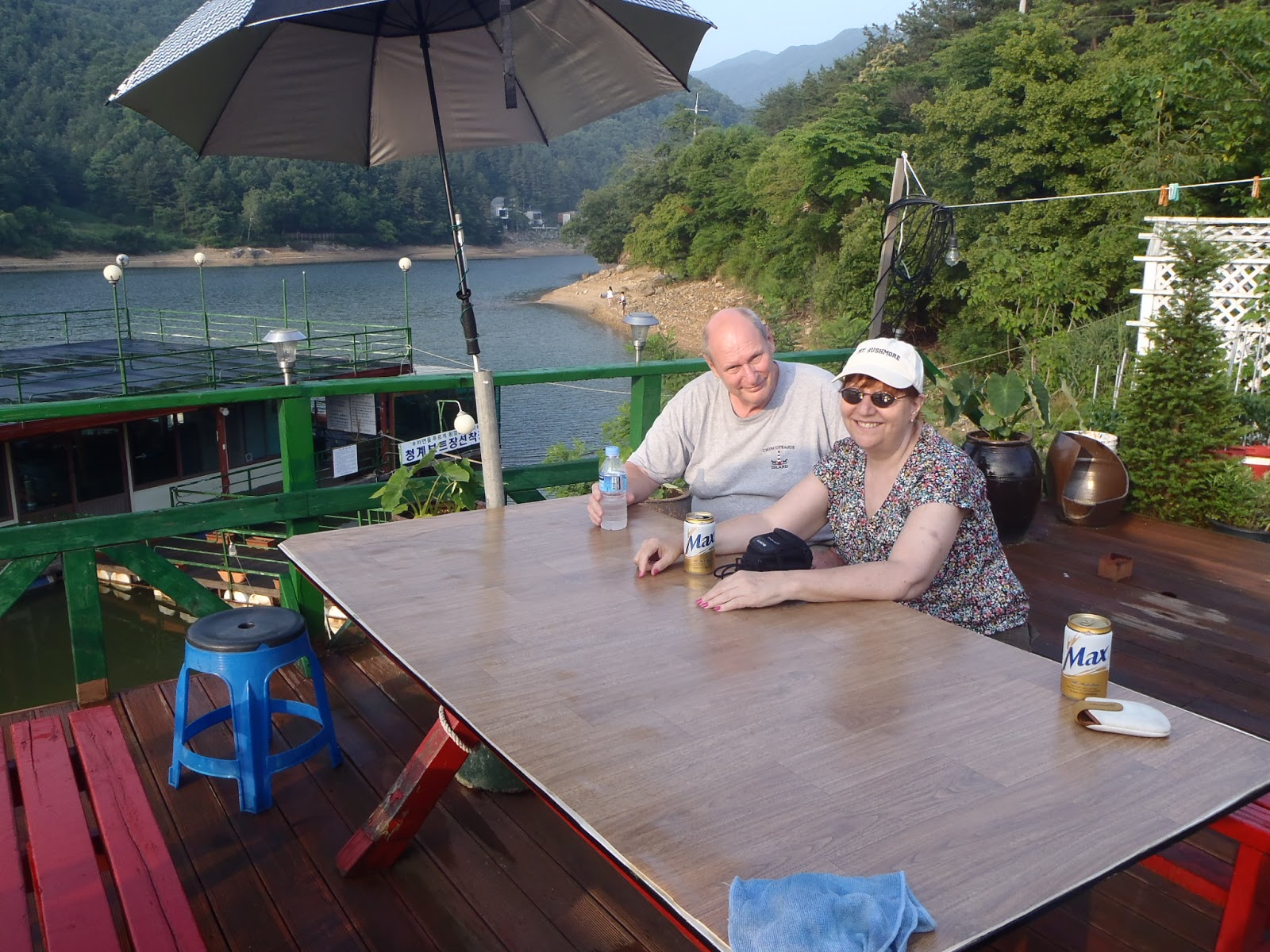
Given the theme of this post so far, it's only fitting that I wrap up this entry with a friend-related item. At the end of December, we headed back to my favorite lake in the country with a great group of friends. Because it's winter, we stayed at a pension that is about a ten-minute walk from our usual place. The reason: It has a hot tub.
We ate and drank and hot tubbed and had a great time just being out of the city. If you're someone who loves city life, Korea is a good fit for you. But if you're not big on it, you have to make occassional trips to the non-city places in the country. Thank goodness Pocheon exists. I might go nuts without it.
Hot tubbing with buddies
What's Next???
For the first time in a long time, I don't really have an answer to this. We don't have a winter trip for LB planned yet, and we're not 100 percent sure if we'll do one at all. We will have a band and magician do a show in February, and we'd like to do more live music in general.
I'm on a soccer team for a February tournament, and LB has a floor hockey team for which we're competing over the next 10 months. At least I'm going to be in great shape.
Other than that, we'll just keep plugging along at LB.
We miss our family and friends back home a lot, but we're so thankful to have such wonderful family and friends here.
I'll keep updating our adventures as long as you keep stopping by!!!
For Jeong Mi and I -- and Liquor Burger -- we really get to see as much of that lifestyle as possible. The year 2013 was no different. We went on a variety of trips, met a ton of great people and had some fun parties. So the final two months of the year, as busy as they were, didn't catch us off guard.
The Makoli Men (November and December)
Our local band -- The Makoli Men -- have been playing a lot of shows recently. We've watched them in Seoul, Songdo and right here at LB in Yeonsu. It's always nice when you get to see your friends become successful. Unfortunately, due to the temporary status of a lot of people here, bands don't get to last together a super long time. But these guys put in a lot of shows together, and it's been a whirlwind of fun.
Here are The Makoli Men in Seoul
LB Thanksgiving Dinner (November)
Thanks to our friends Seth and Lucy, LB Thanksgiving dinner was really easy this year. They hooked us up with their friends, Joe and Sumi, who have access to the Yongsan military base. That meant picking up the turkeys was monumentally less stressful.
We had 40 people or so at LB this year for Thanksgiving dinner. As usual, the food was delicious and the atmosphere was nice and relaxed. We even closed LB down early that night to spend some time with our friends. It was a really great day.
LB's Thanksgiving Feast
After party with our friends.
Star Dance Adieu Party (December)
As everyone knows, Jeong Mi and I met through salsa dance academy. We're fortunate enough to still be in touch with friends from the academy. One of our friends (who also did both of the LB interiors) owns his own dance studio. Every year they have a fun end of the year show and party. So Jeong Mi and I went to watch and support our friends.
The show featured salsa, belly and zumba and was a lot of fun. Afterwards, we spent the night drinking, dancing and singing with our friends. We're so fortunate to have such great friends here in Korea.
Star Dance Party pics
LB Christmas Potluck featuring The Makoli Men and Dinner at Wang's (December)
It's so important to have a nice community and support system while you're living abroad. We just happen to live in the best neighborhood with the best community in Korea. Just like last year, we did our LB Christmas Potluck dinner and it was an awesome event.
Again, we had between 35 and 40 people come over with a homemade dish to contribute to the buffet. Everyone did a really great job on the food. We had a super fun Secret Santa and The Makoli Men played for us.
Check out dinner and the band here
Later on in the week, we once again got to spend time with our friends. A group of us went to Jeong Mi's best friend's house, where we ate, drank and had a great Christmas together.
Christmas with Wang pics
Trivia 100 with Dorian
My favorite weekly event is obviously our Trivia night. It's been a staple of Liquor Burger and has been a really great Thursday night get together for the neighborhood.
For the 100th Trivia, Dorian -- our original host -- came to town to run the show. It was so much fun and we had a lot of teams turn out for it.
Trivia 100 pics
Pocheon Lake Hot Tub (December)
Given the theme of this post so far, it's only fitting that I wrap up this entry with a friend-related item. At the end of December, we headed back to my favorite lake in the country with a great group of friends. Because it's winter, we stayed at a pension that is about a ten-minute walk from our usual place. The reason: It has a hot tub.
We ate and drank and hot tubbed and had a great time just being out of the city. If you're someone who loves city life, Korea is a good fit for you. But if you're not big on it, you have to make occassional trips to the non-city places in the country. Thank goodness Pocheon exists. I might go nuts without it.
Hot tubbing with buddies
What's Next???
For the first time in a long time, I don't really have an answer to this. We don't have a winter trip for LB planned yet, and we're not 100 percent sure if we'll do one at all. We will have a band and magician do a show in February, and we'd like to do more live music in general.
I'm on a soccer team for a February tournament, and LB has a floor hockey team for which we're competing over the next 10 months. At least I'm going to be in great shape.
Other than that, we'll just keep plugging along at LB.
We miss our family and friends back home a lot, but we're so thankful to have such wonderful family and friends here.
I'll keep updating our adventures as long as you keep stopping by!!!